
Dr. Ilay Maden

This series of articles written by Dr. Ilay Maden., Lecturer & Trainer, DMD, MSc (Lasers in Dentistry), PhD (Periodontology) Full C.V
" Laser in Dentistry : luxury or beneficial " All your needs about Laser indication, advantages, limitations, classification and how they are used in dentistry
Dr. Ilay Maden
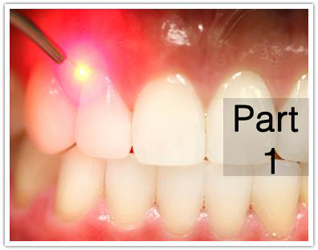
Tissues can be affected by laser energy in different ways. With low levels of laser energy, biomodulation of the tissues is possible, which is a photochemical interaction. With more power, coagulation, vaporization and ablation of tissues is realized as photothermal interactions with tissues.
Dr. Ilay Maden
There are two different kinds of erbium lasers used in dentistry; Erbium-doped yttrium aluminium garnet (Er:YAG ) with a wavelength of 2940 nm and erbium, chromium: yttrium-scandium-gallium garnet (Er,Cr:YSGG) with a wavelength of 2790 nm. The absorbance of these wavelengths in water makes them the most appropriate lasers for dentistry.
Dr. Ilay Maden
Diode lasers are the most cost effective dental lasers as their costs have come down tremendously in the past decade and the spectrum of indications are pretty wide even though tissue removal is limited to soft tissues.
Dr. Ilay Maden
Dental Nd:YAG lasers have a wavelength of 1064nm and they are free running pulsed lasers similar to Er:YAG in means of laser medium and laser production. This makes it work with very high peak powers per pulse although the clinical working average power is similar to diodes around 1 to 4W as its duty cycle is around %0.2.
Dental Business Management Tips
Webinar

Asnsnportal.com Webinars deliver a unique web educational experience through both its live interactiove seminars and recorded seminars...