|
TIP #58
True Facts:
“Like it or not, you are a negotiator.” - Also have in mind that ‘conflict is inevitable!’
But instead of having a destructive communication with your employee, or supplier or patient let’s transform it into a problem solving situation. It is more productive with no hurt feelings!
|
 |
|
TIP #59
Find the type of personality of others personality in negotiation in order to communicate better!
Is the other part:
1. A dominant negotiator?
2. Expressive or communicator?
3. Amiable?
4. Perfectionist?
All 4 categories as well as how to handle each character will be described in next part as of daily advises.
|
 |
|
TIP #60
Characteristics of Dominant Negotiator
Inflexible, rigid. My advice in this case: Be well prepared and talk with facts!
|
 |
|
TIP #61
Characteristics of an Expressive or Communicator Negotiator:
emotional
My advice in this case: Handle the discussion in a friendly manner if you want your work to be done.
|
 |
|
TIP #62
Characteristics of Amiable Negotiator:
they are NOT goal oriented, do not take risks. My advice in this case: Find common ground with them, and low risk solutions since they may take some time to decide.
|
|
|
TIP #63
Characteristics of a Perfectionist:
They want everything to be in writing and precise. My advice in this case: Convince them with logic facts, do not speak a lot, and rather take actions!
|
|
|
TIP #64
A crucial question: “Do we need to master presentation skills?”
The truth is that each time we stand up in front of and audience, whether it is of a 200 people in a congress or we are only with our patient we are selling ourselves, our message, our treatment plan. While we are doing this the audience (however that is) is sitting there judging you. That judgment can be either positive or negative but there will definitely be a judgment. Your presentation creates feelings, of trust or rejection. There are very real consequences to not presenting our selves well. We will severely limit our career potential and can lose business. The decision in the end is always up to us - loose or boost our business!
|
 |
|
TIP #65
Be prepared: 90% of the success of your presentation is determined before we stand up in front of your audience!
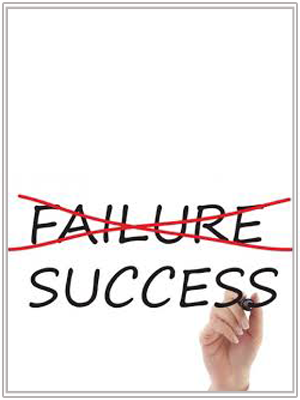
A great presentation is not about you, your comfort or your expertise. It’s about your audience. Fail to prepare→ Prepare to fail.
‘Only one who devotes himself to a cause with his whole strength and soul can be a true master. For this reason mastery demands all of a person.’ Albert Einstein
Mastering Presentation skills depends not only on our charisma but also on our preparation!
|
 |
|
TIP #66
Why do we refuse to prepare correctly?
There are 3 main reasons for that:
1. “I know someone that never prepares and never fails”
It is a myth. You are all the time with that person so you cannot be sure of what kind of a preparation and if he does a preparation in the end – My opinion and personal experience shows that everyone that is a successful presenter - prepares!
2. “I do prepare – in my head”.
You will never get nervous in your own head; never use hems and ums in your head. You will be prefect in your own head - because it is your head!
3. ‘I don’t have time to prepare’.
And next day you lead to be a lousy presenter - with no eye contact with the audience because you read the slides, your voice is monotone, reading and not explaining, resulting in a presentation with unclear message! – Maybe next time you will find time to prepare!
|
 |
|
TIP #67
Patient satisfaction surveys & why we need them!
Research has shown that these are the possible reasons that patients choose to come to us: price, service quality, convenience, past satisfaction - patients will come back to us not because we are the cheapest but because they are satisfied with us. This shows the growing impact that patient satisfaction and dissatisfaction have on the business success of dental practice.
|
 |
|
TIP #68
Why patients change dentists?
A study indicated that dissatisfaction with the way patients were handled by their dentists was the reason for 46% of the patients that were changing dentists.
|
|
|
TIP #69
What do we want to learn when we conduct a patient satisfaction survey?
Our objective is to find out which are the most important factors for patients a, so to continue visiting our dental offices and in the same time find out in which areas we lack, so to improve ourselves and the treatments we offer.
|
|
|
TIP #70
How often should we do a patient satisfaction survey?
Twice per year or if we think that something is going wrong in our practices so via a patient satisfaction survey we can locate the cause asap!
|
|
|
TIP #71
How to check before delivering the questionnaires?
Through a pilot study!
You cat distribute it to a small amount of patients (8-10) for completion while they are waiting for their appointment and then ask them for their impressions (about the format, wording ordering, and simplicity of the questions) and their suggestions. By this you can check and improve your questionnaire in an easy and quick way based directly on the focus of your patients from the beginning.
|
|
|
TIP #72
Find the right sample size from your patient data so to receive accuracy on results!
|
|
|
TIP #73
How should we deliver the questionnaires?
Call our patients; ask them in person, though mail or emails?
The main criteria to choose the right method are the time constraints and the speed that you want to collect the data from them.
|
 |
|
TIP #74
I want to use a mail survey how can I do it effectively? Part1
1. We can prepare and mail the surveys at the same time so to reflect ‘one point in time’.
2. We can provide a postage-paid return, self –addressed mailer for the patient to return the survey
|
 |
|
TIP #75
I want to use a mail survey how can I do it effectively? Part2
3. We can offer a small incentive for responding to the questionnaire such as a small discount on their next dental prophylaxis so to increase the response rates.
4. We can send a follow-up postcard reminder that explains the importance of the results of the survey for the service that we are going to provide to our patients.
|
|
|
TIP #76
We have the data and the results, what comes next?
Immediately apply the results in your practice and wait for the immediate miracles to happen!
|
 |