


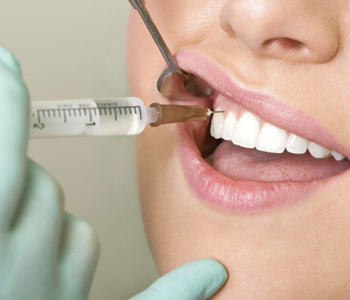
Dentists often have to carry out invasive and painful procedures in the mouth. To minimize patients' discomfort, dentists use anesthetics that block the pain, which are administered using needles. However, many patients are extremely afraid of these injections, resulting in them postponing and even canceling visits to the dentist.
A study published in Colloids and Surfaces B: Biointerfaces, 2015 and carried out by a team of scientists, at Brazil’s University of São Paulo, has revealed a new and innovative technique of administering anesthetic in a patient’s mouth, without using needles. As effective and fast-acting as injections traditionally used in dental surgery, the new method involves the application of small amounts of electric current to give patients a local painkiller-a process called iontophoresis- in the form of a spray, ointment or hydrogel. The research, according to the scientists, could help alleviate the discomfort of those suffering from some form of needle phobia.
The researchers first prepared the anesthetic hydrogels with a polymer to help it stick to the lining of the mouth. They added two anesthetic drugs, prilocaine hydrochloride (PCL) and lidocaine hydrochloride (LCL). They tested the gel on the mouth lining of a pig, applying a tiny electric current to see if it made the anesthetic more effective. The anesthesia was fast-acting and long-lasting. The electric current made the prilocaine hydrochloride enter the body more effectively; the permeation of the anesthetic through the mouth lining increased 12-fold.
"Needle-free administration could save costs, improve patient compliance, facilitate application and decrease the risks of intoxication and contamination," explained Professor Renata Fonseca Vianna Lopez, one of the authors of the study from the University of Sao Paulo in Brazil. "This may facilitate access to more effective and safe dental treatments for thousands of people around the world."


