


Super User
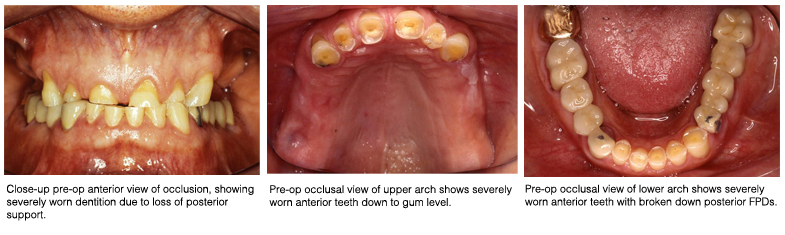
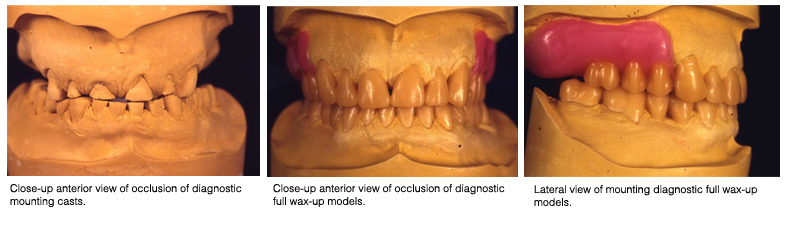
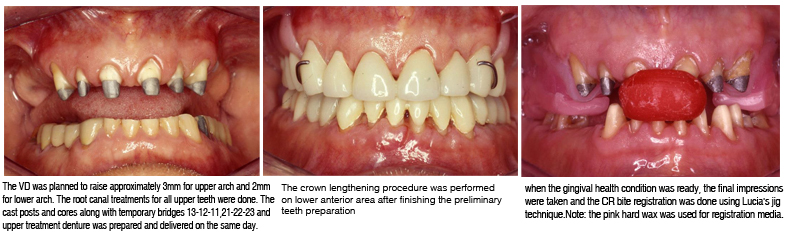
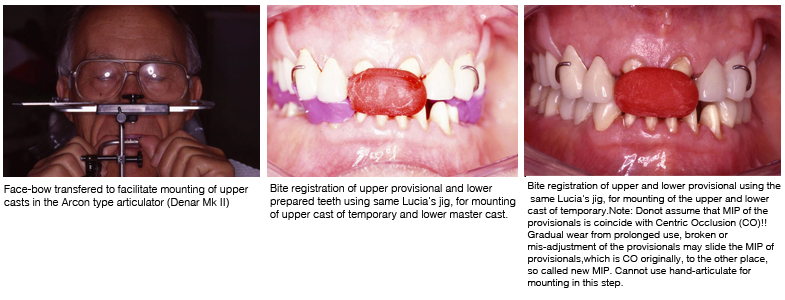
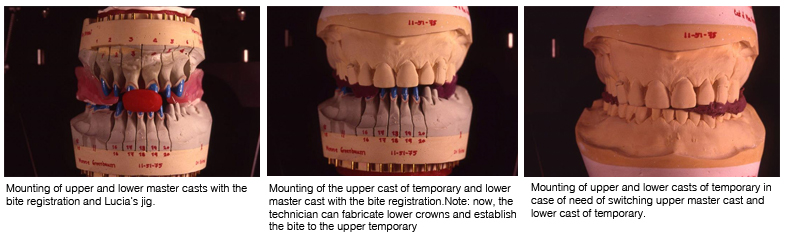
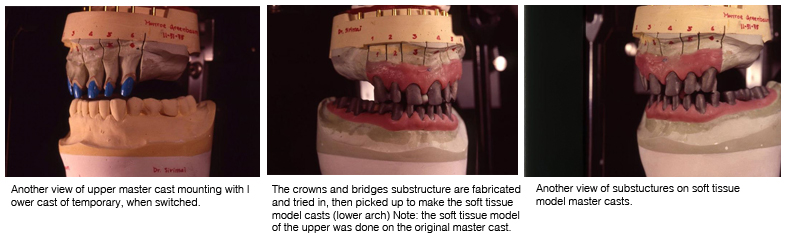
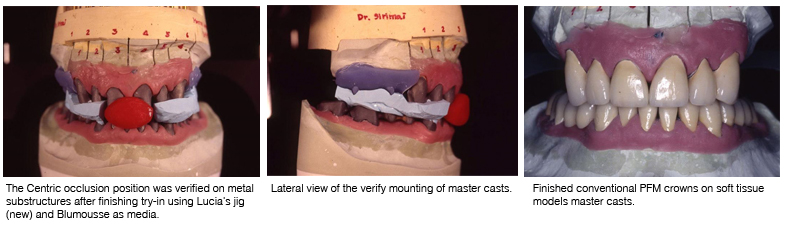
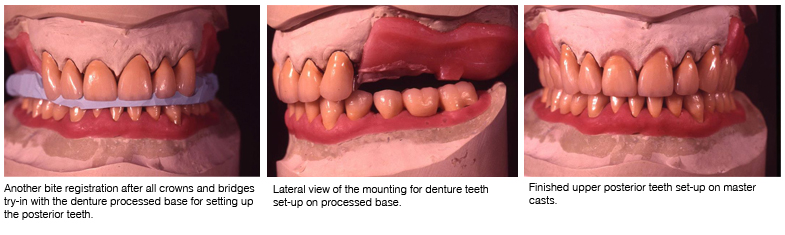
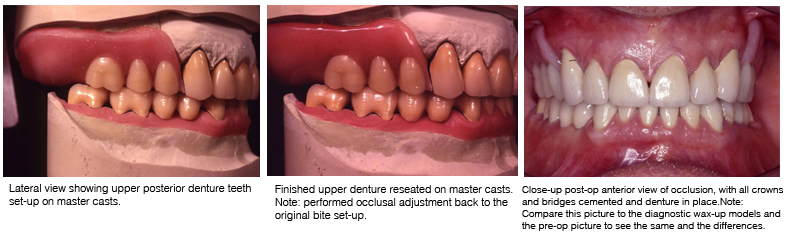
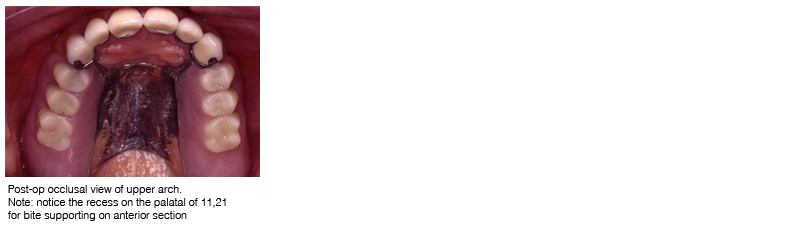
This classic fixed-removable oral rehabilitation case was restored according to the treatment guideline for Category I case (Turner KA, JPD 1984). This case was done almost 20 years ago, composed of upper anterior PFM crowns, full lower arch PFM FPDs and upper PD attachments retained RPD. This picture series exhibit the technique of using Lucia's jig (Lucia VO, JPD 1964) for CR bite registration and the combination of bite registrations for interchangeable mounting model, that enable dentist/technician to fabricate crowns/bridges at the almost exact desirable bite position. The CO position was re-verified in almost every step of treatment, to reduce registration error and to get more accuracy of bite when getting closer to final Vertical dimension. Careful approach with sound technique following good prosthodontics principles will ensure the planned result. Appreciation of the same and the differences of pre-op,wax-up and post-op photo is the evidence.
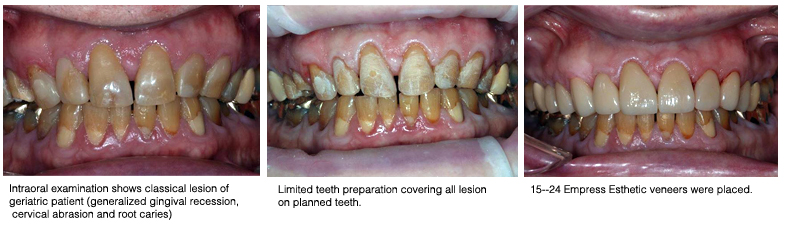
Why should we place ceramic veneer in elderly patient?
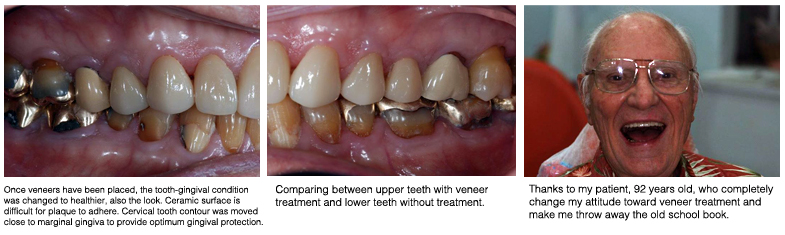
Went back almost 10 years ago, I did this case just because my patient said " I've live for 92 years, and I want to wake up and find my new-me". Once the case was finished, along with the discussion with this patient, I completely change my attitude toward veneer treatment and want to pass all of this to everybody.
Note: The classic oral manifestations in elderly patient are generalized gingival recession, cervical abrasion and root-surface caries. Treatment with ceramic veneer will not only restore the lesions/cavities, but also, improve overall oral condition along with easy maintenance.
การทำวีเนียร์ในผู้ป่วยสูงอายุ ไม่เพียงแต่มีผลทางด้านจิตใจแต่ยังปรับปรุงสภาพเหงือกและฟันของคนไข้ด้วยครับ
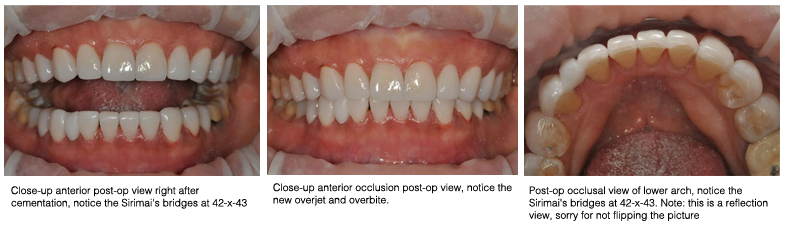
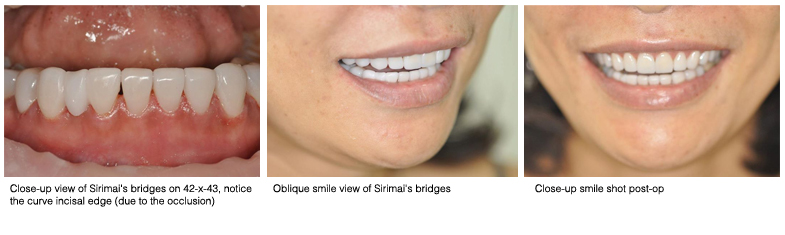
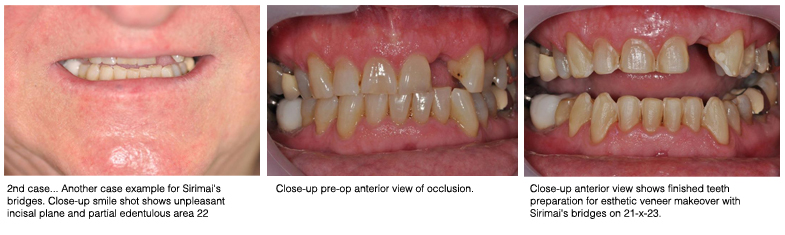
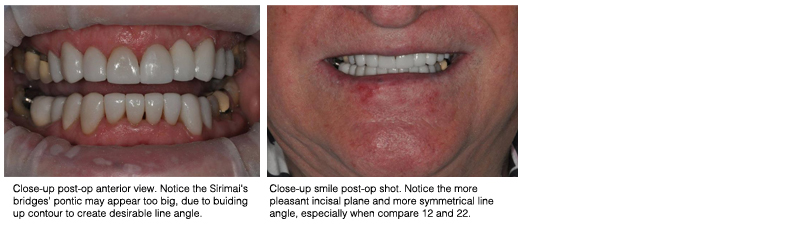
Sirimai's the Original Laminated Veneer Bridges, or Sirimai's bridges, is an alternative treatment option for conventional bridges in the complete veneer makeover case. The treatment design combined the viable features of veneer treatment and the concept of adhesive resin-bonded bridges. The preparation design is like conventional veneer but must have the common path of insertion on both abutment. Key of success is rely on cementation and occlusion.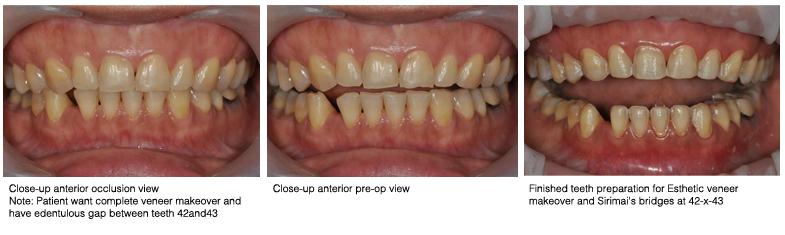

The Le Forte surgical procedure (maxillary impaction) reduces facial height, in these cases, and invariably widens the nasal base. Simultaneously, the Le Forte procedure rotates the alar cartilage laterally. In addition, Maxillofacial and ENT surgeons may perform partial resection of the inferior turbinates, to insure a good nasal airway, postoperatively, in their LeForte patients.

Like so many things in life, timing is everything. Parents, family physicians, pediatricians, family dentists, pediatric dentists, ear nose and throat surgeons, friends, family and, especially orthodontists find themselves, in a unique situation where they can change a child’s quality of life, literally for the rest of that child’s life.

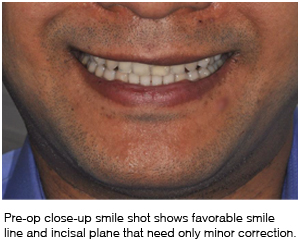
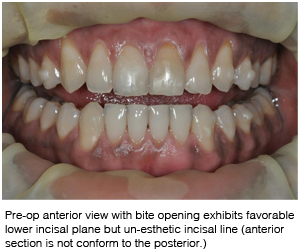
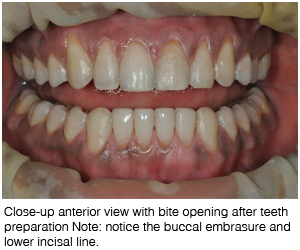
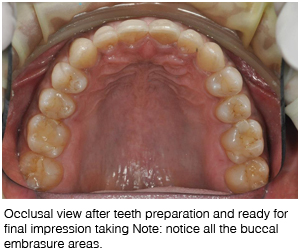
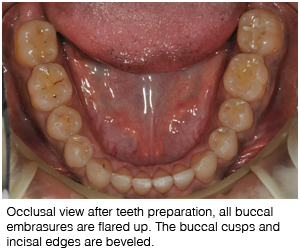
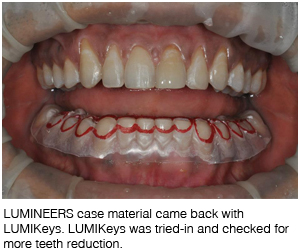
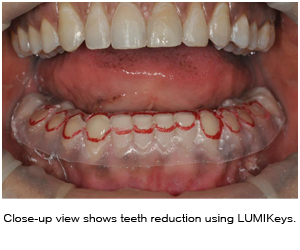
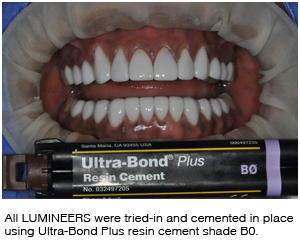
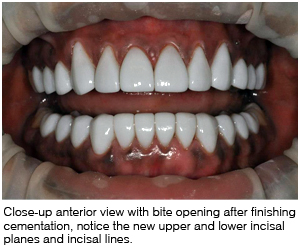
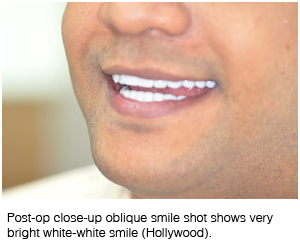
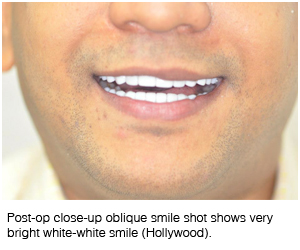
This is a post-orthodontic esthetic wrap-up case. Patient requested for Hollywood smile and had high expectation on the result. Patient also requested to have LUMINEERS from molar to molar, upper and lower. Alignment of teeth and incisal plane is favorable.
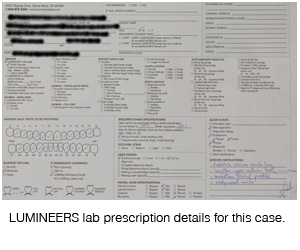
LUMINEERS prescription detailed:
LUMINEERS individually: New Cerinate with low level of translucency
Surface texture: Moderate
If inadequate clearance: Spot opposing and LUMIKeys Reshaping Guide
Current shade: 3M1
Shade requested: 0M1 ... Monochromatic (Body shading only)
Case design: Additional length 1.5mm
Incisal edge specification: Central incisors - Flat, Lateral incisors - Flat, Cuspids - Round, Bicuspids -Round
Specific instruction: Establish convex smile line, Lengthen upper anterior teeth approx. 1-1.5mm, Maintain lower incisal plane, Smoothen labial profile, Make Hollywood smile
 |
 |
 |
 |
 |
 |
 |
 |
 |
 |
 |
 |
 |
 |

Casein phosphor-peptides-amorphous calcium phosphate (CPP-ACP) products have been widely used in the field of preventive dentistry. CPP exerts its main effect through binding and stabilizing calcium and phosphate ions (ACP) in an amorphous, non-crystalline state where they can enter enamel and enhance remineralization. This Articlw is Adapted from: Smile Dental Journal Volume 4, Issue 1 -2009

|
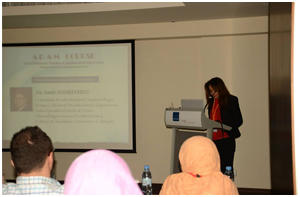
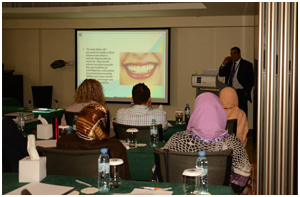
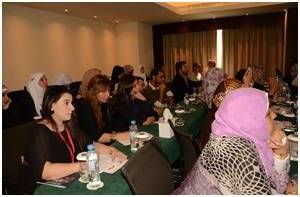
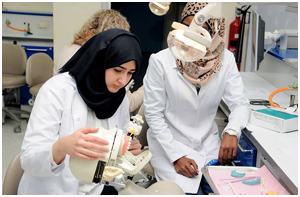
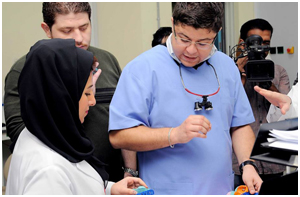
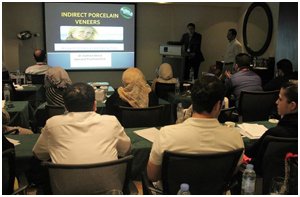
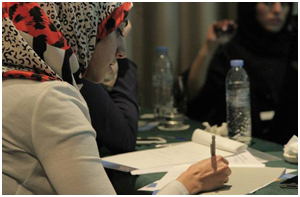
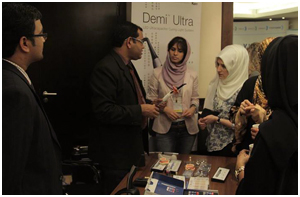
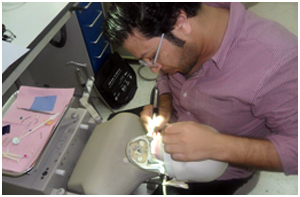
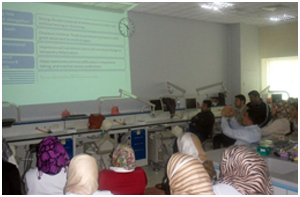
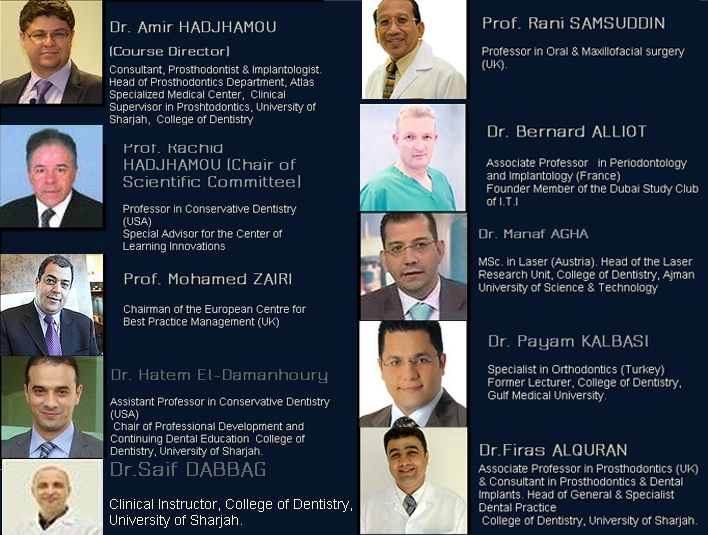
The ADAM Course had finished both of its phases: The Didactic phase & the Practical phase with great success. ADAM Course has addressed the modern concepts of Aesthetic Dentistry that has witnessed a tremendous evolution in terms of dental materials and techniques in a very comprehensive and integrated approach. The Didactic phase with both of its parts: Module I & Module II has reviewed the latest topics relevant to Aesthetic Dentistry and related specialties, with special focus on direct and indirect veneers. Attendees acknowledged the lectures and the course organization, and many dental professionals has expressed their gratefulness to the this great event organizers. |
|
|
|
|
ADAM Course Moule I |
ADAM Course Moule II |
 |
|
 |
|
 |
|
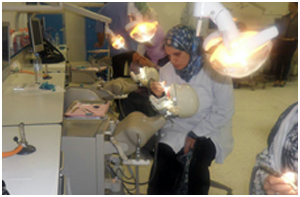
ADAM Course Moule III ( Workshop ) |
|
 |
|
 |
|
 |
|

WHAT is it all about ?
The 2nd Aesthetic Dentistry & Applied Methods aims to address in its three modules course the modern concepts of Aesthetic Dentistry in a very comprehensive and integrated approach, with emphasize on minimally invasive notions. www.adam4sc.com
Webinar

Asnsnportal.com Webinars deliver a unique web educational experience through both its live interactiove seminars and recorded seminars...